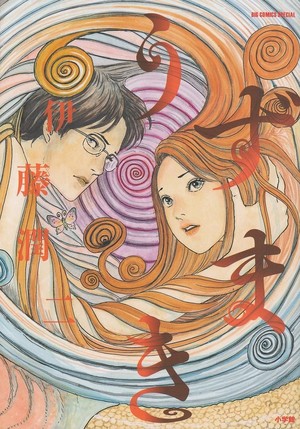
Junji Ito’s Uzumaki has long been hailed as a landmark of psychological horror in manga — and now Masaru Satō’s novelization of the spiraling nightmare has reached a major milestone. The July issue of Shogakukan’s Big Comic Original Zōkan published the final chapter of Satō’s Uzumaki novel on June 12, and fans are eagerly awaiting the compiled edition, which will ship at a later date. This novelization offers readers a fresh literary lens on Ito’s grotesque, irresistible spiral motifs while expanding the world and interiority of a story that continues to creep into new media and imaginations.
What the Uzumaki Novelization Means for Fans
The completion of Masaru Satō’s Uzumaki novel marks a new chapter for longtime fans and newcomers alike. Whereas Junji Ito’s original 1998–1999 manga captivates through disturbing visuals and episodic escalation, a novel offers opportunities to explore character psychology, background details, and descriptive language that can intensify the dread in different ways. Satō — an accomplished author and former senior analyst at Japan’s Ministry of Foreign Affairs — brings a distinct voice and careful pacing to Ito’s nightmarish premise, making this adaptation a significant addition to the Uzumaki canon.
About Masaru Satō’s Uzumaki: Structure and Highlights
Satō serialized the novel adaptation in Big Comic Original Zōkan, concluding the run with the magazine’s July issue on June 12. The story remains faithful to the core premise: a coastal town besieged by bizarre and escalating spiral phenomena. But the novel form allows Satō to expand scenes, deepen character motivations, and linger longer over atmosphere and dread. The compiled novel will be released as a single volume at a later date for readers who prefer collected editions.
Key differences from the manga
- Deeper internal monologues and psychological portraits of key characters.
- Expanded connective tissue between episodes; events that the manga presents visually can be explained or reframed through prose.
- New descriptive language that turns Ito’s visual body horror into evocative, sensory writing while preserving the original’s unsettling logic.
Who Is Masaru Satō? The Fan Turned Novelist
Satō’s relationship with Junji Ito’s work is itself part of the appeal. A longtime fan — he’s said he became interested in Ito after seeing someone reading Uzumaki on a train — Satō has collaborated with Ito before: he wrote the original story for the Yūkoku no Rasputin manga, illustrated by Ito. Uzumaki marks Satō’s first full-length novel, and his background outside of fiction (including government service) brings a unique observational quality to the prose.
Uzumaki’s Ongoing Legacy: Manga, Film, and Anime
Junji Ito’s Uzumaki began as a serialized horror manga in the late 1990s and has since established itself as a modern horror classic. It has inspired multiple adaptations and reinterpretations over the years:
Live-action and anime adaptations
- 2000 live-action film: A cult horror film adaptation starring Eriko Hatsune and Fan Fhi brought the spiraling terror to the screen in a visceral, practical-effects-driven way.
- 2024 anime adaptation: An anime version premiered on Adult Swim’s Toonami block in September 2024 and concluded in October 2024, bringing Ito’s grotesque visuals to animation and introducing Uzumaki to a wider global audience. The anime has also been made available digitally with English audio through multiple platforms.
Where to watch and buy
Viz Media released the anime digitally with English audio across platforms such as Amazon, Google Play, iTunes Store, Microsoft Store, and VUDU, and the series has streamed on the Max service. For manga readers, Viz’s English releases — including three individual volumes in the mid-2000s and later omnibus editions — remain the standard way to read Ito’s original work in translation. For more information about Viz’s releases, visit Viz Media’s official site. Viz Media
Why Uzumaki Continues to Terrify
Uzumaki’s power lies in the combination of concept and execution. The spiral is at once simple and inexorable: a geometric motif that becomes metaphor, obsession, and contagious phenomenon. Ito’s art converts ordinary objects and bodies into grotesqueries, but the underlying terror is the slow, logical escalation — small oddities that become larger, more systemic, and impossible to escape. A novelization like Satō’s has the chance to amplify psychological dread by describing sensations and internalization that the manga renders visually.
The spiral as symbolic engine
On a symbolic level, the spiral represents repetition, obsession, and cycles that trap people and places. In prose, each repeated pattern can be described, reframed, and given retrospective significance; in that sense, Satō’s novel may reveal new ways to interpret the spiral’s grip on the town and its inhabitants.
What Fans Can Expect from the Collected Edition
Readers who prefer a single, polished volume can expect the compiled novel to collect Satō’s serialized chapters in book form, possibly with editorial corrections, an author note, or additional extras — typical features for Japanese novel compilations. Publication timing has not been specified beyond “will ship at a later date,” but the serialized conclusion on June 12 confirms the work is complete and moving toward print.
Final thoughts
Masaru Satō’s Uzumaki novel is an important cultural moment for fans of Junji Ito and modern horror. It translates Ito’s haunting visual logic into prose while keeping the original’s spiraling momentum intact. Whether you’re a longtime reader curious to see how the story breathes in text form or a newcomer drawn in by the recent anime and film adaptations, Satō’s novel offers a new avenue into one of horror’s most enduring and unsettling myths. Keep an eye out for the compiled edition — and prepare to be drawn deeper into the spiral.
https://www.myanimeforlife.com/uzumaki-novelization-concludes/?feed_id=231822&_unique_id=6a3a13b574633
Comments
Post a Comment