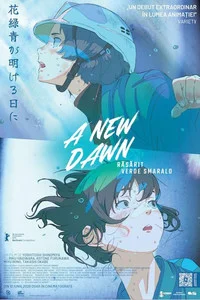
A New Dawn — Film Review: Lush Visuals and Small-Town Heart
Yoshitoshi Shinomiya’s feature directorial debut, A New Dawn, is a quietly ambitious film that places painterly visuals and tactile production design at the center of a small-town drama. Set around a 330-year-old fireworks factory threatened with demolition, the story follows a reunited group of friends — including Kaoru and Sentaro, who return from Tokyo — as they attempt to complete the mythical "Shuhari" firework. The result is a film that often mesmerizes with image and texture even when its screenplay remains deliberately oblique.
A New Dawn’s visuals are dense with color, texture and inventive background work.
Visual Mastery: Shinomiya’s Painterly World
A New Dawn’s strongest asset is its background art. Shinomiya, known for his background work on films by prominent directors, brings dense, luminous color and an almost impressionist texture to everyday spaces. The countryside tableaux — treelines rendered as splotches of green, interiors that seem carved from memory — create a lived-in aesthetic that elevates the smallest moments.
Shinomiya resists photorealism in favor of expressive touches: lineless artwork, smudged brushstrokes to represent rain, and backgrounds that occasionally swell into abstraction as characters move. These visual experiments make the film feel less like a standard anime and more like a moving illustration where environment and mood lead the viewer’s emotions.
Standout Visual Sequences
There are sequences that actively redefine the film’s scope: a stop-motion cardboard diorama with real hands intruding into the frame, for example, transforms a drunken character’s perception into something tactile and oddly charming. The climax — the reveal and detonation of the "Shuhari" — uses painted streaks of light and surreal metamorphosis to justify the film’s earlier circular conversations about the firework’s legend. When the film leans into visual excess, it becomes transcendently beautiful.
Textures, brushstrokes and inventive mixed-media moments mark Shinomiya’s debut.
Story and Screenplay: Intimacy That Keeps Its Distance
While A New Dawn excels visually, its screenplay is more measured — perhaps overly so. The film’s small-scale narrative focuses on friendship, craft, and the desire to capture a mythic moment through the creation of a single firework. However, the importance of the "Shuhari" itself remains hazy for much of the runtime, and the script often obfuscates conversations in a way that keeps characters emotionally at arm’s length.
That distance is a stylistic choice: Shinomiya seems invested in mood and memory rather than plot-forward drama. Some viewers will find this contemplative approach rewarding; others may feel the revelation surrounding the "Shuhari" lacks payoff because the film withholds context and stakes until late. Still, the climactic sequence repays a patient watch, transforming earlier ambiguity into a strikingly poetic payoff.
Characters and Performances
Characters are drawn with restraint rather than exposition. The trio at the center of the story are believable as people shaped by place and craft, but the film rarely stops to fully unpack their inner lives. Instead, personality is often conveyed through the spaces they inhabit — cluttered workshops, warehouse bedrooms, and the aged factory itself — which act as character proxies and help bridge the emotional gap the screenplay sometimes leaves open.
Themes: Memory, Craft, and Community
At its core, A New Dawn is a meditation on the act of making — both fireworks and memories. The film uses the threatened demolition of the factory to explore how cultural knowledge and local craft persist (or vanish) across generations. The motif of reconstruction — trying to complete a lost masterpiece — echoes broader anxieties about preservation and change in rural communities.
These themes are subtle rather than polemical. Shinomiya trusts the viewer to sense the melancholic reverence and the quiet hope that fuels the characters’ efforts. The result is an elegiac tone that sits comfortably alongside the film’s visual bravado.
Why Anime Fans Should Watch
If you appreciate films where background art and atmospheric direction do much of the storytelling, A New Dawn is essential viewing. Fans of richly textured animation and mixed-media experimentation will find much to admire. The movie also serves as a strong calling card for Shinomiya, showcasing his strengths as a visual storyteller even as he learns to tighten narrative clarity in feature-length work.
For readers who want to dig deeper into the craft, there are useful resources that explain the artistic traditions referenced in the film — from classic pyrotechnic history to stop-motion techniques — for instance, a primer on fireworks and their cultural history can be found on Wikipedia. Fireworks — history and craft (nofollow)
Final thoughts
A New Dawn is a film of contradictions: intimate subject matter expressed on a grand visual scale, a script that withholds while the art gives everything away. The film’s strongest moments justify its slower pace — particularly when Shinomiya lets the image soar and embrace the surreal possibilities of its medium. While the screenplay could stand to be clearer about its emotional payoffs, the sensory richness and inventive visual language make A New Dawn a memorable and worthwhile debut. For viewers who favor atmosphere, texture, and visual innovation over plot-driven clarity, this film will linger long after the final ember fades.
https://www.myanimeforlife.com/new-dawn-manga-release/?feed_id=234635&_unique_id=6a4192f483f45
Comments
Post a Comment