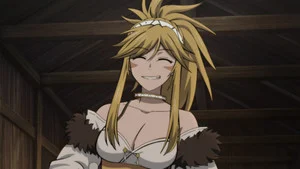
Episode 6 of The Warrior Princess and the Barbaric King doubles down on the show's darker, more provocative instincts — and not always in ways that serve the story. Between explicit creature design, problematic fanservice choices, and a few surprising moments of accountability, this episode is a mixed bag: fascinating worldbuilding and symbolism buttressed by clumsy handling of female bodies and consent. Below I break down the highs and lows, what the episode reveals about the series' themes, and what to watch for in future installments.
Sexualization, Tentacles, and Narrative Tone
One of the most jarring elements of episode 6 is its unabashed use of tentacle imagery to sexualize an otherwise tense combat sequence. The Fiend’s attack on Malcius is framed not merely as a threat but as an explicitly sexualized assault: the creature strips and fondles her while she is incapacitated. Even accounting for the monster’s role as a malevolent force, the camera linger and the choreography veer into the kind of prurience we've seen in more exploitative titles.
This direction undermines attempts to treat the encounter as a serious consequence of Malcius' reckless magic use. Instead of balancing horror with narrative weight, the sequence often reads like fanservice masquerading as peril. For viewers sensitive to depictions of sexual violence, these creative choices may be difficult to watch and are unlikely to be redeemed by the episode’s plot context.
Accountability and the Portrayal of Harassment
When a Gag Crosses the Line
The episode also leans on a recurring trope: using “silly western women” as the butt of a joke about sexual assault. That gag reappears here in an awkward and tone-deaf way that compounds the earlier scene’s problems. It reduces serious concerns about consent to cultural caricature, which is disappointing in a series that otherwise tries to examine civilizational tensions.
A Surprising Moment of Clarity
Credit where it’s due: the show does call out some of the more problematic behaviour. Wysterisia's groping of Sera — a moment that could have been shrugged off as comic relief — is explicitly identified as harassment by Veor, who forces his mother to stop. That reaction is welcome and somewhat rare in anime where woman-on-woman groping is often played purely for laughs. This small scene becomes a noteworthy example of accountability, even if the wider context of the episode undercuts its impact.
Creature Design and Religious Symbolism
Beyond the problematic fanservice, episode 6 offers one of the season's most intriguing revelations: the Fiend’s core appears to be a half-decomposed angelic figure, with eyes where breasts should be. This unsettling design ties into recurring Christian-style imagery in the series — Malcius' nun outfit, saints, and ecclesiastical trappings — and invites larger questions about corruption within religion and the nature of "good" and "evil."
Is the Fiend a corrupted angel? Did the church or an organized faith play a role in creating or transforming such beings? Malcius' flashback hints at complicated ties: the religious institution that raised her is implicated both in her parents' deaths and in shaping her path. If the show is hinting at institutional rot, the Fiend’s design may be less gratuitous ornamentation and more a symbolic statement about faith gone awry.
Character Dynamics: Women, Marriage, and Social Expectations
Episode 6 adds layers to Illdoran society through Wysterisia’s attitudes about marriage and domesticity. Two Illdoran women — Wysterisia and another character who opted for a “barbarian” domestic life instead of knighthood — emphasize the show’s recurring theme: conflicting social roles for women across cultures. Wysterisia’s insistence that Sera and Veor marry (or at least consummate a relationship) reads as pressure to conform to traditional roles.
These scenes highlight a tension at the heart of the series: when cultural norms are presented as inevitable outcomes of history and intermingling, they can feel organic and believable. But when female characters are defined primarily by sexualization or reduced to marriage plotlines, the story’s worldbuilding fails to extend the same care to individual agency.
Worldbuilding: East vs West and Moral Ambiguity
Despite its flaws, episode 6 does excel at subtle worldbuilding. Wysterisia’s exposition about how cultures changed through intermingling is a rare instance of believable social evolution in fantasy. The show often presents Illdorans and “barbarians” as two poles of a cultural divide, and here we see how those boundaries are porous rather than absolute.
That said, the series still struggles with heavy-handed east/vs/west binaries. Veor’s closing lines suggest the narrative will pursue answers to the Fiend’s origins and the church’s role — which could deepen moral ambiguity if handled well. But given the show’s uneven handling of gender and consent, there’s reason to be cautious about whether future episodes will balance critique with nuance.
Where to Watch
Warrior Princess and the Barbaric King is currently streaming on Crunchyroll.
What to Look For Next
- Further exploration of the Fiend’s origins and any ties to religious institutions.
- Whether the show continues to call out harassment and treat consent seriously, or slips back into comicization of abusive behavior.
- Deeper development of the female characters’ agency beyond marriage and sexualization.
- How the East/West cultural friction evolves — will it be complicated or reduced to simple binaries?
Final thoughts
Episode 6 is emblematic of the series' strengths and weaknesses: provocative imagery and intriguing symbolism sit beside clumsy treatment of female bodies and consent. The revelation about the Fiend’s angelic core suggests a richer thematic ambition centered on corrupted faith and cultural collisions, but the show undercuts those ambitions with exploitative visual choices. If upcoming episodes commit to meaningful character agency and continued moral complexity, this season could redeem its missteps. Until then, viewers should be prepared for striking worldbuilding wrapped in often uncomfortable presentation.
For more on how tentacle imagery has been used historically in anime, see this overview on Wikipedia.
https://www.myanimeforlife.com/warrior-princess-barbaric-king-episode-6-review/?feed_id=214696&_unique_id=6a0647fcd9d84
Comments
Post a Comment