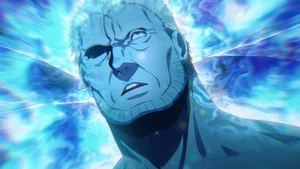
Snowball Earth’s episode 6 doubles down on melodrama and spectacle, but not always in the way you’d hope. The installment brings Colonel Sagami and his motley crew of kaiju tamers into direct conflict with Tetsuo, Yukio, and Hagane, revealing motivations that feel both petty and oddly performative. While the episode provides key backstory and a few memorable 2D sequences, tonal inconsistency, awkward CG, and baffling character choices make this entry one of the more divisive so far. Below is a deeper look at what works, what doesn’t, and why this episode lands the way it does.
Episode recap: the rise (and fall) of Sagami’s vendetta
The episode opens with Sagami’s plan finally being unmasked: a full-blown scheme driven by his jealousy toward a child who became the savior figure he once hoped to be. Sagami’s status as a pre-apocalypse war hero makes the reveal feel oddly undercut — he enjoyed fame and adulation once, so why is he so consumed by losing that role now? Rather than present a subtle or layered villain, the episode opts for a childish, almost farcical motivation. Sagami forms an organization dedicated to training other children as “saviors,” a petty attempt to reclaim the prestige he envies. The plan quickly collapses when his own lieutenants balk and allow Tetsuo and his friends to escape, leaving Sagami exposed and humiliated.
Character analysis: petty motives and missed opportunities
Sagami — the tragicomic antagonist
Sagami’s characterization in episode 6 reads less like a layered antagonist and more like a cautionary tale about unchecked ego. The revelation that his entire crusade stems from jealousy of a child robs his actions of gravitas; revenge is a valid motive, but here it feels cartoonish. His theatrical poses and facial contortions — including one especially ridiculous “donkey-face” moment — push him toward parody rather than menace. That may be intentional, but it clashes with scenes that try to play his arc seriously.
Tetsuo, Yukio, and Hagane — human anchors
The protagonists act as stabilizing forces in the episode. Their camaraderie and straightforward sense of purpose contrast sharply with Sagami’s performative theatrics, which helps the audience sympathize with them even when the plot becomes contrived. The rescue/escape beats show them outmaneuvering a more experienced foe, which is satisfying, if predictable.
Visuals and animation: when 2D shines and CG falters
One of the strengths of episode 6 is its use of 2D animation to convey Sagami’s backstory and emotional beats. These moments feel vibrant and textured, adding depth to scenes that might otherwise be purely expository. Unfortunately, the episode’s CGI sequences are much less impressive. The kaiju models and motion work often come off stiff or plasticky, creating a jarring contrast with the hand-drawn segments.
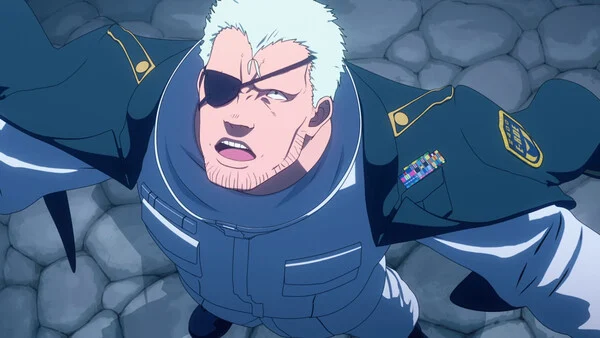
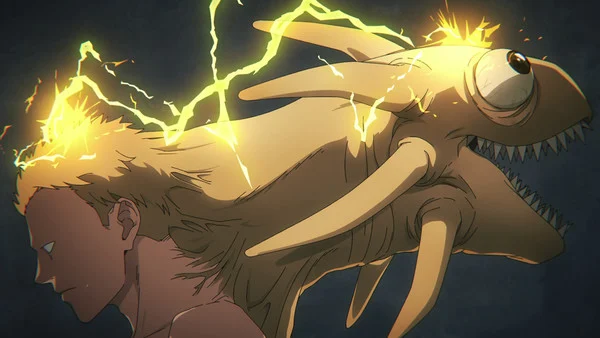
Visually bizarre moments — like a scene where Sagami’s hair morphs into a googly-eyed kaiju — undercut dramatic tension because they invite laughter instead of awe. These surreal images can be read as metaphorical (his identity merging with his kaiju), but the execution is so odd that it’s hard to take them at face value.
Themes and tone: revenge, identity, and tonal whiplash
Episode 6 explores familiar themes — envy, identity, and the corrosive nature of revenge — but it struggles to commit to a consistent tone. Scenes that attempt to be tragic or menacing often slide into slapstick because of awkward visual choices and over-the-top acting. The result is a tonal whiplash: you’re never quite sure whether to feel sympathy, disgust, or amusement toward Sagami. That uncertainty could be an intentional storytelling device, but here it mostly reads as uneven execution.
What worked and what didn’t
- Worked: 2D backstory sequences that provide emotional context and visual warmth.
- Worked: The protagonist trio’s chemistry — it keeps scenes grounded and engaging.
- Didn’t work: Villain motivation that reads as petty and underdeveloped.
- Didn’t work: Inconsistent animation quality; CG feels noticeably weaker than the hand-drawn segments.
- Didn’t work: Surreal visual gags that unintentionally deflate dramatic stakes.
Where this episode fits in the series arc
With roughly half the series remaining, episode 6 attempts to recalibrate the stakes by introducing a clear antagonist with a personal vendetta. That’s a useful move narratively, but the execution means Sagami is more of a hindrance than a compelling adversary. The episode does, however, set the stage for future confrontations: the retreat of Sagami’s lieutenants hints at internal instability in his organization, which could be exploited by Tetsuo and his allies in later episodes. Expect more character-driven conflicts and perhaps a deeper exploration of power dynamics between adults and youth in this world.
Where to watch
Snowball Earth is available to stream on Crunchyroll. For official streaming and more episode details, check the series on Crunchyroll (opens in a new tab).
Watch Snowball Earth on Crunchyroll
Final thoughts
Episode 6 of Snowball Earth is a mixed bag: it delivers meaningful backstory and strong character moments for the protagonists, but undermines those gains with an antagonist whose motivations feel petty and visuals that often clash in quality. The episode is memorable — just not always for the right reasons. If you’re invested in the characters and curious to see how the political and personal struggles escalate, it’s worth watching. But be prepared for tonal swings and some frustrating choices in CGI and villain design. Hopefully the next episodes refine Sagami’s arc and balance the show’s visual styles more consistently.
https://www.myanimeforlife.com/snowball-earth-episode-6-review/?feed_id=212753&_unique_id=6a0152d2d5e91
Comments
Post a Comment