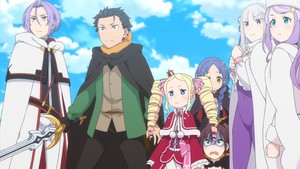
Re:ZERO -Starting Life in Another World- (Season 4) episode 5 delivers a tightly woven installment that feels like two separate narratives braided into one hour: the continued exploration of the mysterious tower and a haunting, character-driven memory that deepens the franchise’s lore. This episode balances exposition and emotional weight with a mix of dread and curiosity, offering answers while opening new questions for Subaru and his companions.
Episode overview: Two stories in one
The episode unfolds as a clear two-parter. On one hand, we have Subaru’s ongoing navigation of the tower’s rules and trials—the practical, plot-forward portion that advances the arc. On the other, we’re given a stand-alone memory sequence focusing on Typhon, a character briefly glimpsed earlier in the Witches’ Tea Party. Though the Typhon sequence is not directly consequential to Subaru’s immediate goals, it enriches the series’ mythos and illuminates the tragic logic behind a terrifying power.
The library revealed: Memories as a narrative device
One of the most striking reveals is the nature of the tower’s library: it contains books that hold the memories of every person who has ever lived. Conceptually, this is a goldmine for a story like Re:ZERO. Practically, two constraints keep it from being a deus ex machina. First, the books are unordered, forcing characters to search rather than instantly obtain solutions. Second, the reader must personally know a person to access their book and experience their memories. This preserves tension while giving the characters (and the audience) a logical path to uncover buried information.
The contract and its consequences
We also learn that Shaula is bound by a magical contract which dictates strict rules for anyone inside the tower: do not leave the prescribed areas, follow individual floor rules, avoid harming the library, and do not destroy the tower. Violation of these terms compels Shaula to kill the offender, regardless of her personal will. This mechanic introduces a looming Sword of Damocles—an ever-present threat that elevates even small mistakes into existential dangers. The possibility of an additional hidden rule (hinted at with “Anastasia”) adds a further layer of dread and speculation.
The second trial: Weapon, fighter, and stakes
After the library revelations, the group moves on to confront the tower’s second trial. The trial’s reward is a weapon—likely necessary for future challenges—but the act of drawing it summons a rough, capable fighter. This suggests that the tower alternates between intellectual and physical tests, ensuring the party must be balanced in both wits and combat. For Subaru and his allies, the trial is a reminder that brute strength and teamwork will be as essential as cleverness.
Typhon’s memory: Innocence, guilt, and a terrible logic
Where this episode truly shines is in Typhon’s backstory. Her memory sequence reframes her as a child who, upon learning that moral categories like “good” and “evil” were subjective, concluded that feeling guilt equated to having done something evil. Raised by an executioner father and empowered by the Authority of Pride, Typhon’s logic became deadly: anyone who felt guilt in her presence literally crumbled to pieces.
The tragedy of unintended consequences
Typhon’s power punishes remorse and regret, not necessarily wrongdoing. That means empathetic people who feel guilt over mistakes are uniquely vulnerable, while sociopaths or those without conscience remain unaffected regardless of their crimes. The horror is doubled by Typhon’s own lack of guilt—she never sees herself as doing wrong. The result is a mass murderer who believes she is carrying out justice, a chilling example of how absolute powers mixed with flawed moral philosophy create tragedy.
Themes: Guilt, memory, and narrative pacing
The episode explores recurring Re:ZERO themes—memory, responsibility, and the ambiguity of morality—while demonstrating skilful pacing. The memory-books conceit lets the show furnish lore in ways that are both organic and ominous. Even when a subplot seems tangential, it often feeds into character arcs or future plot developments. Typhon’s memories may not help Subaru immediately, but they enrich the worldbuilding so future revelations land with greater resonance.
How the episode uses contrasts
Contrasts are key here: intellectual vs. physical trials, knowledge vs. ignorance, and guilt vs. amoral certainty. These juxtapositions keep tension high and prevent the episode from feeling like pure exposition. Visuals and mood—especially in Typhon’s memory—lean into uncanny quiet and moral horror, whereas the tower sequences emphasize strategy and stakes, producing a satisfying tonal balance.
Implications for Subaru and the arc ahead
Subaru and his allies gain useful context but no easy solutions. The library’s rules mean answers cost time and connection; the contract over Shaula means allies can be turned into weapons against their will. The physical nature of upcoming trials ensures that preparations must be holistic. This episode sets up an arc where knowledge alone won’t save the protagonists—choices, relationships, and sacrifices will matter just as much.
Re:ZERO -Starting Life in Another World- is currently streaming on Crunchyroll. For additional series info and episode lists, see the entry on MyAnimeList.
Final thoughts
Episode 5 is a strong installment that plays to Re:ZERO’s strengths: layered worldbuilding, morally complicated characters, and a willingness to let side stories deepen the primary narrative. The library’s mechanics and Shaula’s contract raise the stakes in meaningful ways, while Typhon’s memory offers a tragic meditation on guilt and justice. This episode doesn’t resolve the central mystery, but it smartly expands the board—forcing characters and viewers alike to think several moves ahead.
https://www.myanimeforlife.com/rezero-s4e5-review-breakdown-highlights/?feed_id=210823&_unique_id=69fd0654a339c
Comments
Post a Comment