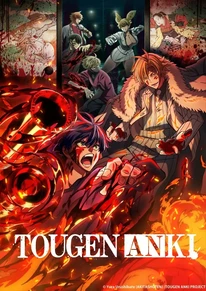
Tougen Anki arrives as a familiar-feeling shounen: revenge-driven protagonist, a secret society hunting supernatural beings, and a school that trains those persecuted to fight back. While it checks most boxes for the genre, its execution alternates between striking visual moments and narrative choices that leave emotional beats feeling underbaked. Below I break down where the series shines, where it stumbles, and whether it's worth picking up for fans of action-oriented supernatural anime.
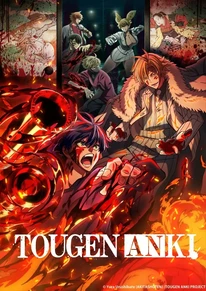
Tougen Anki — Shiki Ichinose faces a brutal world where Oni and hunters collide.
Quick Synopsis
Shiki Ichinose is a rebellious teen with a love for guns who learns he is secretly an Oni—a being able to shape its blood into weapons—after a violent encounter with the Momotarou, an organization dedicated to eradicating Oni. When his adoptive father is killed in that attack, Shiki vows revenge and ends up at Rasetsu Academy, a hidden school for Oni where students learn to harness their abilities and defend themselves.
Genre Tropes: Comforting or Constricting?
Tougen Anki leans heavily on classic shounen tropes: the hotheaded avenger, the stoic loner, the ostensibly useless girl who proves her worth, comic relief side characters, a mysterious mentor, and sudden power-ups. These familiar elements can be comforting—fans of the genre often watch precisely for these beats—but the series rarely contextualizes them in a way that makes the audience care.
Where other shows expand on relationships and motivations to make tropes feel earned, Tougen Anki often presents character archetypes without the connective tissue. Shiki’s drive for vengeance, for example, lacks the deep emotional scaffolding that would make his anger feel necessary rather than rote. Secondary characters are frequently reduced to quirky traits and plot conveniences until the story retroactively attempts to justify their moments with brief backstory dumps.
Pacing and Narrative Structure
One of the series’ recurring issues is its approach to pacing and exposition. Emotional weight is commonly delivered in ways that interrupt momentum—narrative pauses to have a narrator explain a character’s past, or late-stage flashbacks that attempt to retroactively deepen stakes after dramatic events have already passed. This reverse-order emotionalism can make the flow feel backward: big events hit hard, but the show often tells you why you should have felt something afterwards, rather than building feeling organically beforehand.
Characters: Surface vs. Substance
The main and supporting cast are easy to recognize and occasionally fun to watch in combat, but their personalities often remain at the level of shorthand. When the series does invest time in backstory and motivation, those moments are often effective—suggesting that slightly different sequencing or more measured development could have strengthened the overall experience.
In short: the potential for layered characterization exists, but it frequently arrives after the show expects you to already care.
Voice Acting: A Strong Point
Despite script limitations, the cast generally elevates the material. Performances push hard to imbue scenes with emotion, and lead performances in particular warrant praise for selling the show's ups and downs. Whether watching sub or dub, the actors’ commitment makes many scenes feel more urgent than the writing alone allows.
Visuals & Animation: A Mixed Bag with Standout Moments
Visually, Tougen Anki is most compelling during its action sequences. The show relies heavily on CGI for combat choreography, which is a gamble that pays off at moments and falters at others. Early episodes showcase jarring shifts between 2D and 3D models that can be distracting, but as the series progresses the integration improves—there are instances where the line between CG and hand-drawn movement blurs effectively, producing kinetic, expressive fights.
Some of the show’s inserted music cues and rock-inflected action tracks work well to emphasize a punkish aesthetic, though the series rarely commits fully to that identity outside the big fight moments. Character designs are hit-and-miss: many male characters share similar silhouettes while female designs trend toward a narrower style, leaving the cast visually less diverse than it could be.
Creativity in Power Design
A redeeming element is the imaginative approach to Oni abilities—manipulating blood into different weaponry yields visually inventive sequences and adds flavor to the combat. When the show trusts those ideas and pairs them with tighter storytelling, it finds its best moments.
Rasetsu Academy and the conflict with the Momotarou shape much of the show’s drama.
Who Will Enjoy Tougen Anki?
If you’re a fan of shounen formulas and enjoy high-energy fights, bold power concepts, and committed voice acting, Tougen Anki can be entertaining—particularly if you prioritize spectacle over finely-tuned character arcs. However, viewers who want carefully paced emotional development and nuanced motivations may find the series frustrating when it leans too heavily on genre shorthand without sufficient narrative follow-through.
Final thoughts
Tougen Anki is a show of contrasts: energetic and occasionally inventive on the surface, but often lacking the deeper emotional connective tissue that would make its stakes land consistently. Improved pacing, earlier character development, and a stronger commitment to its punkish visual identity could have turned familiar tropes into something more distinct. Still, the series’ best moments—creative power designs, dramatic action, and dedicated voice work—suggest there is promise if future installments choose to dig deeper into motivation and worldbuilding. For now, Tougen Anki is worth a look for action-first viewers, but those seeking emotionally rich storytelling may want to temper expectations.
https://www.myanimeforlife.com/tougen-anki-manga-latest-news/?feed_id=187325&_unique_id=69bcdaea39a32
Comments
Post a Comment