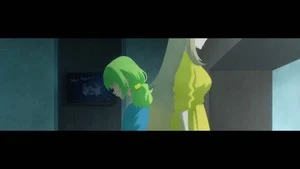
SHIBOYUGI’s ninth episode doubles down on the series’ signature blend of theatrical spectacle and gutting psychological cruelty. Where previous installments teased the world’s systemic depravity, this entry makes that rot feel close enough to touch — a carnival of horrors with a polished veneer. Between the calculated sadism of the Rabbits, Moegi’s chilling backstory, and the show’s delightfully toxic yuri undercurrents, Episode 9 is a brutal masterclass in how to make death games feel like a decadent, postmodern performance.
How Episode 9 Deepens the Worldbuilding
From the outset, SHIBOYUGI has positioned its death games not simply as survival contests but as media spectacles — rituals meant to entertain a privileged, removed audience. Episode 9 expands on that concept by showing how every grim detail is engineered to produce maximum emotional return. The rules, the theatrical trappings, and even the apparent “randomness” of danger all feel intentionally designed to elicit catharsis, outrage, and prolonged engagement from those watching behind the scenes.
The Games as Postmodern Spectacle
This episode pushes the analogy between these death games and historical spectacles further: gladiatorial pageantry, staged naval battles, and other mass entertainments where cruelty was dressed in ceremony. But the show updates the metaphor for a modern, media-savvy aristocracy that demands novelty. The result is a form of entertainment where predictability is the enemy, and emotional cruelty becomes the currency. That’s why the Rabbits’ methods — when contrasted with the raw brutality of Stump weaponry — feel so insidiously effective.
Interrogation, Torture, and the Ethics of Performance
One of the episode’s most arresting scenes involves the Rabbits using tickle-torture to extract information from a Stump. On paper it’s almost laughable: a slyly sadistic method that avoids the messy finality of killing. But the comedy is dark and intentional — a signal that ordinary morality has been contorted. In a world designed to make suffering appeal like high art, even “lesser” forms of cruelty are curated for maximum audience enjoyment.
Why “Refined” Cruelty Is Scarier
There’s a perverse logic to the Rabbits’ approach. If slaughter is too crude for patrons with elevated tastes, then small, intimate forms of humiliation and emotional torment become preferable. This episode nails how that shift from blunt violence to psychological theatre amplifies the horror. Intimacy breeds empathy, and empathy magnifies spectacle; viewers at home get more invested because they’re invited into the emotional calculus of suffering, not just its aftermath.
Moegi’s Flashback: The Making of a Killer
Episode 9 gives Moegi a devastating character beat: an extended flashback showing her mentor’s grotesque appetite for violence. The mentor is a flamboyant, almost cartoonish predator — a character with obscene tastes and casual cruelty — and the sequence reframes Moegi’s ruthlessness as something manufactured rather than born. This isn’t a lone psychopath operating outside the system; it’s the system itself curating and placing such people where they’ll do the most damage.
Manufactured Violence and Systemic Responsibility
That Moegi’s mentor appears as a premeditated insertion into the Candle Woods game is crucial. It argues that the violence in SHIBOYUGI is engineered: killers are not anomalies but components. This reframing shifts blame from individuals to institutions, suggesting a sociopolitical machinery that deliberately produces trauma for consumption. That bleak inference makes the show much more than gore and thrills; it becomes a commentary on how entertainment can normalize cruelty when profit and novelty are the only true gods.
Yuri Drama and Emotional Tension: Why It Works
Beyond the sociological critique, Episode 9 earns points for its interpersonal tensions. The yuri elements — the charged looks, complicated affections, and tightened alliances — add an electric layer to an already tense atmosphere. Romance here isn’t a safe harbor; it’s another axis along which the games manipulate emotions. Love and attraction become tools both for survival and for the audience’s pleasure, doubling down on the show’s theme that even intimacy can be commodified.
Performance, Desire, and Survival
The interplay between genuine feeling and performative susceptibility is one of SHIBOYUGI’s strengths. Characters make real emotional investments, but the world’s design forces them to perform those feelings under surveillance. That duality creates moments of heartbreaking authenticity: when a character’s genuine care becomes the very thing exploited to maximize drama, it lands much harder than simple shock value ever could.
Context: Why This Episode Matters to the Series Arc
Episode 9 isn’t just another checkpoint in the progression of fights and eliminations. It distills the series’ larger thesis: that cruelty is not a bug but a feature of the system and that entertainment culture can become a machine that produces and recycles human suffering. The episode’s psychological density — combined with its dark humor and stylistic flourishes — crystallizes what the show has been building toward and raises the stakes for what comes next.
If you want to reframe this episode in broader media terms, consider how modern audiences curate outrage and spectacle through platforms, agendas, and algorithms. For further reading on the “death game” concept as a narrative device, this overview of the genre can be useful: Battle royale (genre) — Wikipedia. And if you’re looking to stream the series, it’s available on Crunchyroll.
Final thoughts
Episode 9 of SHIBOYUGI is a bruising, incisive example of how a series can use spectacle to interrogate spectacle itself. By layering theatrical cruelty over intimate emotional stakes, the episode transforms brutality into commentary — and does so while delivering a tense, gripping installment. Between Moegi’s haunted backstory, the Rabbits’ perfected sadism, and the show’s toxic-yet-compelling yuri dynamics, this chapter deepens the series’ moral complexity and ensures the audience stays emotionally invested — whether that’s comforting or uncomfortable is precisely the point.
https://www.myanimeforlife.com/shiboyugi-episode-9-review-death-games-for-survival/?feed_id=179873&_unique_id=69ad09b6e35e4
Comments
Post a Comment