Hana-Kimi’s episodes 11–12 attempt to close the school festival arc and plant seeds for bigger emotional payoffs, but instead they land as a strangely muted conclusion. The finale stitches together a cavalcade of incidents — a barely-there “chicken fight,” an underused antagonist, a manufactured threat to Mizuki, and a hasty 2,000m relay — yet none of it comes together with the urgency or charm the source material deserves. This review breaks down what works, what doesn’t, and why these two episodes feel like a missed opportunity for a classic shoujo adaptation.
Episodes 11–12 Overview: A Quiet, Unearned Ending
The school festival arc wraps up without the kind of emotional clarity or momentum that usually defines a satisfying season finale. Rumors circulated that the anime was originally planned as a 36-episode run, which could explain the abruptness here: scenes that should have had time to breathe are compressed or glossed over. Instead of decisive payoffs, the episodes feel like a series of vignettes loosely stitched together — some amusing, some frustrating, and few impactful.
Key Moments and Missed Opportunities
The “Chicken Fight” (Cavalry Battle) That Never Takes Off
The much-hyped “chicken fight” turns out to be a brief cavalry-style scrap that lasts barely a minute on screen. Translation choices (opting for “chicken fight” over the more familiar “cavalry battle”) compound the oddness, but the real issue is execution. The sequence lacks weight: blows glance off, the choreography is forgettable, and the supposed danger to Mizuki feels manufactured rather than earned. When an elbow grazes her face and she drifts toward the ground, the moment is played for tension but lands as a shrug — emblematic of the series’ pacing problems.
Mizuki’s Threats: Recycled Tropes, Weak Payoff
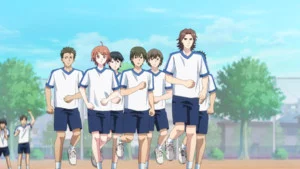
From a falling flowerpot to an opportunistic lock-in during the cross-dressing pageant, attempts to jeopardize Mizuki’s participation in the relay rely on stale shoujo beats. These incidents should ramp up stakes and galvanize character relationships, but the direction treats them like checklist items rather than escalating threats. The climactic relay, crucial to the emotional arc of Dorm 2, is animated thinly and resolves in a rushed 30-second burst — a major disappointment given how central the event is to the plot.
Nanba’s Subplot and the Underused Antagonist
Nanba’s encounter with his middle-school tutor — an awkward, emotionally loaded scene — aims to deepen his character, but it ultimately serves only as a contrivance so he can request a hug from Mizuki. Sano’s jealous reaction is played for a momentary laugh, but the subplot otherwise adds little to the festival arc. Even more galling is the near-squandering of Masao Himejima (voiced by a well-known actor), who’s set up with theatrical energy as a minor antagonist but receives only seconds of screen time. The series teases a flamboyant foil and then doesn’t deliver.
Direction, Pacing, and Animation
Two recurring problems define these episodes: pacing that never finds a satisfying rhythm, and animation that slips off-model at crucial moments. Slice-of-life shoujo can thrive on leisurely beats, but only when each scene has clear intention. Here, direction often treats connective tissue as dispensable. Scenes that need to convey emotional stakes are cut short, while trivial banter is given equal weight. The relay’s visually rushed execution underscores limited production resources or tight scheduling, which undermines dramatic payoff.
Character Moments That Needed More Time
Small moments — Sano’s bad dream where he asks Mizuki to climb into bed, or Nakatsu’s bruises after protecting Mizuki — have emotional potential. Yet they’re not nurtured into larger beats. Instead of contributing to an accumulating sense of care and sacrifice, these scenes feel like scattershot notes that never cohere. Better scene composition, musical cues, and slightly longer runtimes could have transformed these into resonant character moments.
Adaptation Choices and Faithfulness to the Manga
Adapting a beloved 90s shoujo manga is always a balancing act between being faithful and making smart cuts. In this case, the anime preserves many plot points but loses the connective tissue that makes the manga’s character interactions sing. Fans invest in Hana-Kimi for its emotional interplay and comic timing; an adaptation that rushes or under-animates crucial sequences risks alienating both newcomers and longtime readers.
Voice Acting and Music
Voice work in these episodes shows flashes of charm, and the cast does well with the material they’re given. There are moments when performances hint at what could have been a richer emotional arc. The soundtrack supports scenes adequately but isn’t given the space to elevate key moments because of the episodes’ compressed nature.
Where to Watch
Hana-Kimi is available to stream online. If you want to rewatch these episodes and judge the finale for yourself, you can find the series on Crunchyroll (rel="nofollow" target="_blank">Crunchyroll
Watching with an eye on pacing and scene composition highlights how different decisions might have improved the adaptation.
What Could Have Made Episodes 11–12 Better
- Expand runtime for the school festival finale: allow the “chicken fight” and relay to breathe and build tension.
- Fully utilize Masao Himejima as a scene-stealing antagonist instead of a cameo tease.
- Reorder or trim filler beats that distract from core emotional arcs (Nanba’s subplot could be threaded more tightly into the relay stakes).
- Invest in animation for the relay and key physical moments to give the athletic scenes visual payoff.
Final thoughts
Episodes 11 and 12 of Hana-Kimi deliver several charming beats but ultimately feel like an adaptation that ran out of runway. The school festival wraps up with a handful of fun moments and a lot of squandered potential: underused villains, a rushed relay, and emotional scenes that barely register. For viewers hoping for a satisfying conclusion to the arc, these episodes are likely to frustrate rather than fulfill. Still, there’s warmth in the core character relationships, and with better pacing and production choices this story could have become a standout shoujo adaptation. As it stands, Hana-Kimi remains an uneven but occasionally delightful watch — worth a look for fans of the genre, but far from definitive.
https://www.myanimeforlife.com/hana-kimi-episodes-11-12-review/?feed_id=187397&_unique_id=69bce759b39ad
Comments
Post a Comment