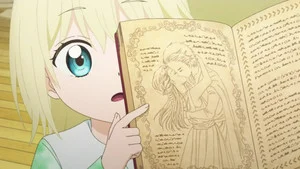
Champignon Witch’s ninth episode deepens the series’ examination of folklore, prejudice, and moral ambiguity. What begins as a simple errand for young Lize turns into a sobering lesson about how the world treats those marked by “taint.” Through a haunting children’s rhyme, a poisoned animal, and the fairies’ cold moral code, the episode confronts viewers with the disturbing consequences of rigid binary thinking about magic and morality.
Episode recap: errands, riddles, and a poisoned bird
The episode follows Luna and Claude as they send Lize out to run errands around the village, accompanied only by Minos. The trip functions like a child’s first solo outing — parents watching from a distance — with the Mushroom Lord of the Black Forest helping Luna and Claude keep tabs on him. Most of the day proceeds uneventfully, but the emotional fulcrum arrives when they encounter a bird corrupted by the world’s poison miasma. Lacking the magical sheet that would stop the creature’s pain, Lize uses the fairies’ gifts to soothe the animal. Instead of praise, however, the fairies respond with outrage: why would Lize waste their power on a tainted being?
Dark children’s rhymes and unsettling folklore
The episode opens with children playing a stone game as they sing a chilling rhyme that catalogues how black witches are doomed. It’s a deliberate echo of the tradition in which seemingly innocent nursery rhymes and cautionary tales hide darker meanings. For context on how children’s literature has historically mixed whimsy and cruelty, Heinrich Hoffmann’s 1845 collection is a useful (and unsettling) example: Merry Stories and Funny Pictures. Champignon Witch uses this motif to foreshadow the social violence baked into its world: playtime refracted into a litany of deaths and ostracism.
The moral test: Lize at a crossroads
Lize’s decision to help the bird is classic fairy-tale behavior — a compassionate act often rewarded in folklore. But the series flips expectations. The fairies’ fury reveals the harsher logic of the dominant culture: once someone or something is tainted by black magic, they are unworthy of kindness. This puts Lize in a painful position. He is not cynical; he is moved by suffering. If doing what feels morally right causes the white-aligned authority figures to condemn him, what does that say about the “good” powers he’s learning from?
Comparisons to cinematic fairy lore
The scene recalls moments in fantasy cinema where idealized notions of fairies or magic are punctured by realism. In Labyrinth, for example, a child’s naive assumptions about fairy benevolence are undercut by grimmer truths about other characters’ motivations. Champignon Witch invokes that same tension: the idea that kindness and ritualized purity can be at odds, and that institutions labeled as “good” can uphold cruel systems.
Thematic layers: prejudice, othering, and history
One of the episode’s stronger moves is how it frames prejudice as institutional and systemic, not merely interpersonal. The rhyme the children sing, the fairies’ doctrine, and the adults’ reactions all show how the world’s anti-black-magic attitude is taught and reproduced. Lize’s internal conflict suggests the possibility of resistance: he questions the orthodoxy by acting compassionately even when it’s disapproved of. The series encourages viewers to ask whether moral rightness is determined by custom or by empathy.
Why the fairies’ anger matters
The fairies’ hostility toward Lize underscores the story’s worldbuilding. Their role isn’t simply to help the pure; it’s to police boundaries. By weaponizing generosity — only bestowing aid upon the “worthy” — the fairies become agents of exclusion. This complicates the viewer’s instinct to idolize white-aligned magic and pushes the narrative toward a nuanced critique of purity politics.
Symbolism of the poisoned creatures and tear mushroom tea
The poisoned animals are more than plot devices: they embody the lingering damage of the world’s corrupting influence. Minos’ efforts to give magic sheets to suffering creatures show a small, deliberate form of care inside a harsher system. Likewise, Luna’s tear mushroom tea — a bittersweet concoction that converts sorrow into something useful — symbolizes how acknowledging pain and working through it can generate healing. These contrasts highlight the show’s recurring message: confronting suffering honestly, rather than erasing or shunning it, opens a path to genuine compassion.
Character implications and long-term stakes
Lize’s choice here may shape his moral arc. He’s learning that conventional wisdom isn’t synonymous with justice. If the series continues to position him against rigid norms, Champignon Witch could become a story about reforming, or resisting, an entrenched moral order. The episode raises stakes beyond the immediate errand: how will Lize reconcile his empathy with a world that disciplines those who stray from its doctrines?
Where to watch
Champignon Witch is available to stream on Crunchyroll for viewers who want to follow Lize’s journey and the show’s deeper themes in real time: Crunchyroll — Champignon Witch.
Final thoughts
Episode nine of Champignon Witch is a compact, resonant installment that uses folklore and small emotional beats to interrogate larger social systems. By challenging the notion that “white” magic equals moral goodness, the show forces both Lize and the audience to consider the true cost of purity-driven ethics. It’s an episode that pairs quiet tenderness with uncomfortable truths — a reminder that compassion often requires defying the rules rather than following them.
https://www.myanimeforlife.com/champignon-witch-ep-9-review/?feed_id=175660&_unique_id=69a2213f71e8f
Comments
Post a Comment