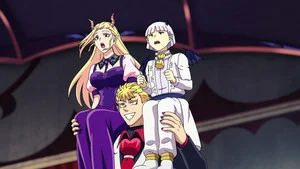
Welcome to Demon School, Iruma-kun (Season 4) Episode 8 delivers a character-driven installment that leans into memory, music, and the tension between generations. Where previous episodes leaned on slapstick and school-chaos comedy, this one lets quieter emotional beats shine — especially through Poro and the Purson family dynamic. The episode uses a music festival subplot to reveal how nostalgia, expectations, and the courage to be oneself clash and ultimately create growth.
Episode recap: pride, music, and a generational divide
Episode 8 centers on the Misfit Class's attempts at a music festival performance and the emotional fallout that follows. Two adult figures — Poro and Mr. Purson — are forced to confront how out-of-step their attitudes are with the current generation of demons. Poro is haunted by memories of Derkila and reacts harshly to the students’ musical attempts, while Mr. Purson tries (and ultimately struggles) to insist his children conform to an old standard of behavior. The episode makes room for a quieter hero: Soi Purson, whose decision to stand up to his father and perform on his own terms becomes the emotional core of the story.
Character focus: Poro’s nostalgia and the cost of living in the past
Poro's behavior in this episode reads as the fallout of a man stuck inside an idealized memory. His reverence for a past relationship with Derkila — whether that relationship was mutual or imagined — has calcified into an emotional armor. The music they shared is Poro's most tender memory, and that tenderness has been weaponized into perfectionism and gatekeeping. Rather than seeing the Misfit Class as a space for new connections, Poro measures them against a private standard formed by his recollections.
What makes Poro compelling here is that his cruelty isn't cartoonish villainy; it’s the defense mechanism of someone who mourns and misremembers. When Poro finally admits, even briefly, that he was wrong, it’s less a full conversion and more a crack in his façade — but that crack is meaningful. It hints at the possibility that nostalgia can be reconciled with the present rather than used to deny it.
Character focus: Soi Purson’s rebellion and parental expectations
Soi's storyline is the beating heart of the episode. He’s a character who has historically been anxious and overshadowed, but here he demonstrates real agency. Encouraged by friendships in the Misfit Class and by Iruma’s clumsy-but-earnest leadership, Soi chooses to defy his father’s rigid expectations. This is not a melodramatic severing of ties — it’s a nuanced insistence on agency. Soi tells his dad he won’t be the “perfect son” molded to family pride; instead, he announces a commitment to pursue music and leadership on his own terms.
Soi’s defiance is powerful because it stems from a place of growth, not rebellion for its own sake. He’s learned from his peers, found confidence, and used the festival as a moment to claim the life he wants. That arc — from hidden child to performing, self-assertive youth — is treated with warmth and realism.
Music as a narrative device: more than just background
The episode uses music as a connective tissue between characters and generations. For Poro, music is a shrine to the past. For Derkila (in Poro’s memories) and for Soi and Iruma, music is a method of self-expression and bonding. The contrast between music as relic and music as liberation is central: what was once a private ritual becomes a communal act that empowers younger demons.
The rooftop jam between Iruma and Soi functions as a deliberate echo of Poro’s memories with Derkila. The show doesn't pretend the parallels are identical — they aren’t — but the comparison is instructive. While Poro clings to a frozen moment, Iruma and Soi use the same medium to build something new. That shift reframes the Misfit Class’s performance as a hopeful passing of the torch rather than a pale imitation.
Why Soi’s victory matters
Soi’s choice to speak up to his parents and perform is more than a momentary triumph; it’s a refusal to be defined by someone else’s narrative. The episode makes clear that parental love can be complicated — sometimes mixed with projection and fear — and that children reclaiming their agency is healthy. Soi’s announcement reads as both an emotional release and a strategic step into adulthood.
Execution: direction, pacing, and emotional beats
Stylistically, Episode 8 takes a softer tonal approach than many entries in the series. The pacing allows for contemplative beats — a memory here, a hesitant conversation there — which gives the voice cast room to sell small emotional shifts. The animation supports musical moments with expressive staging (notably the rooftop sequence) and the Misfit Class performance lands as an ensemble triumph. If the episode has a quibble, it’s that some scenes lean heavily on implication rather than explicit resolution; Poro’s turnaround is meaningful but measured, leaving room for future development.
There’s also a meta-concern: with the season’s rhythm and the focus on character-driven interludes, the prospect of a clip show next week would be disappointing for viewers hoping for continued narrative momentum. That said, the current episode’s strength lies precisely in its emotional texture, which makes it worth savoring either way.
Where to watch
Welcome to Demon School, Iruma-kun (Season 4) is streaming on Crunchyroll. For more details about the series and episode availability, check the official streaming page. Watch on Crunchyroll.
Final thoughts
Episode 8 is a standout for how it handles subtle emotional stakes. Instead of relying on gags or spectacle, it explores the real cost of living in the past and the slow courage required to claim a different future. Poro’s nostalgia and Mr. Purson’s pride are believable, human obstacles, while Soi’s emergence into confidence is the kind of quiet victory the series does well. If you value character growth and thematic depth wrapped in light-hearted fantasy, this episode delivers — and it leaves space for richer payoffs in later installments.
https://www.myanimeforlife.com/iruma-kun-season-4-episode-8-review/?feed_id=217993&_unique_id=6a12feefe089a
Comments
Post a Comment